By Maria Butler
“We cannot tire or give up. We owe it to the present and future generations… to rise up and walk.” — Wangari Maathai
By Maria Butler
“We cannot tire or give up. We owe it to the present and future generations… to rise up and walk.” — Wangari Maathai
I keep returning to certain moments from the convening. I was sitting beside Shirin Ebadi when she received the call that war had broken out in Iran on February 28. The urgency was already present, in our analysis, in the strategies being shared, and in the realities many participants had just come from.
It sits alongside other moments—the music shared in a rural community, the first evening of dancing, the Angel Walk on the final day, a collective and cathartic journey and the quiet exchanges in between where something shifted. These are the moments that build sisterhood: shared tears, hugs, tea, long bus rides—and yes, dancing.
Being together with women activists in this moment, witnessing their courage and resilience up close, reminded me what real strength looks like.
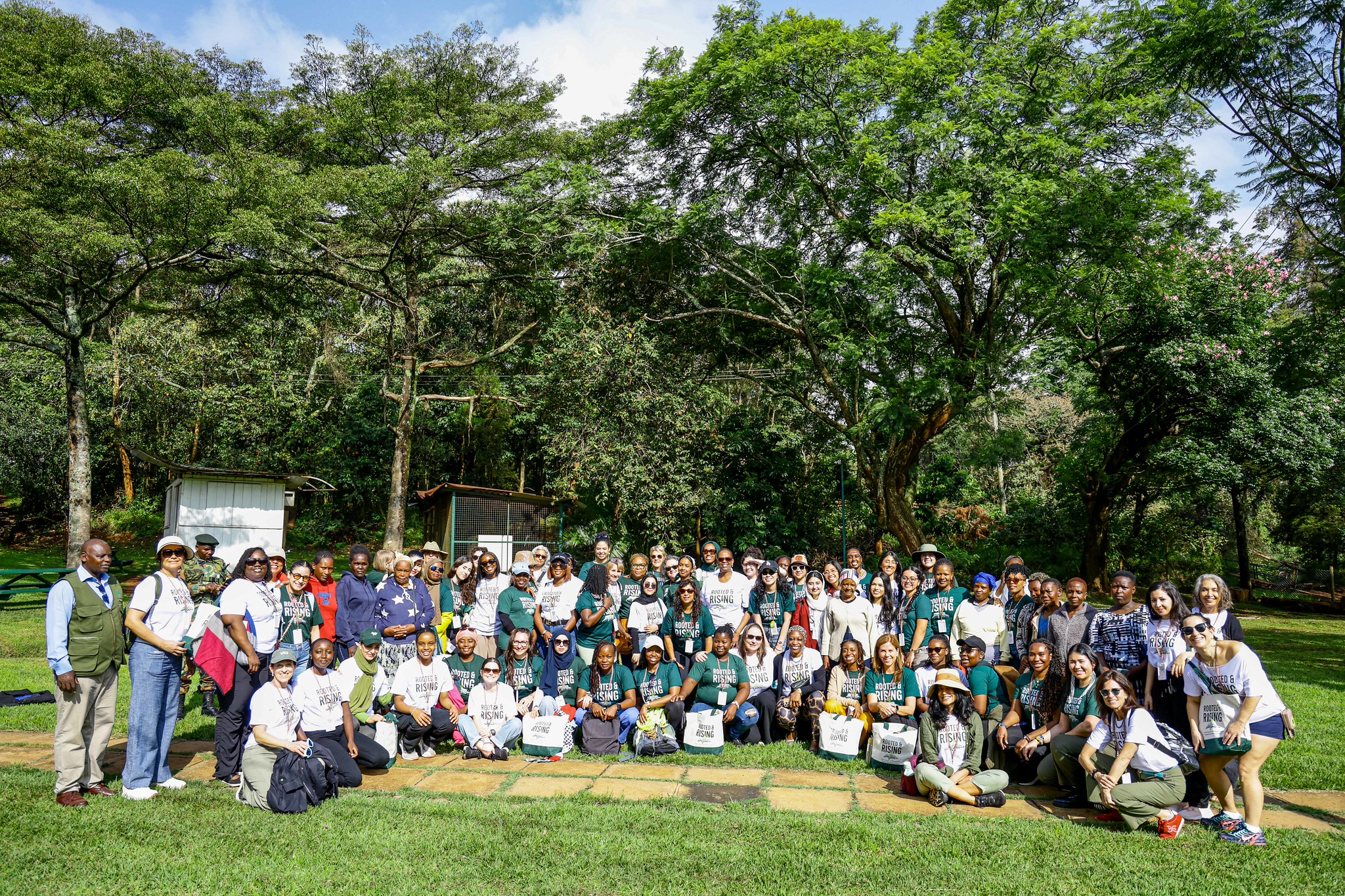
NWI gathered women leaders from 35+ countries, alongside Nobel laureates and partners, for a week of connection, strategy, and solidarity.
We met with hundreds of Kenyan leaders—in communities, in the forest, and through Tea & Feminist Dialogues in Nairobi, where conversations centered on Gen Z feminist movements, civic space, localisation, climate justice and femicide.
Walking through Karura Forest, honoring Wangari Maathai’s legacy with women from around the world, was unforgettable. Being with women in rural communities was grounding—a reminder that feminist leadership has to be practiced, not just named.
Alongside this were diplomatic engagements, roundtables on Ukraine and Sudan, a UN visit, and media engagements across TV, radio, and podcasts—all while navigating the realities of convening work: shifting plans, flight changes, and evacuations.
From 1–5 March 2026, Nairobi became a gathering place for feminist leaders from more than 35 countries—women organizing on the frontlines of war, occupation, authoritarianism, climate collapse and shrinking civic space.
Participants came from Yemen, Palestine, Ukraine, Iran, Liberia, Mexico, Kenya, the Democratic Republic of Congo, and beyond. They included grassroots organizers, civil society leaders, young feminist activists, and Nobel Peace Prize laureates Shirin Ebadi, Oleksandra Matviichuk, and Leymah Gbowee.
Rooted & Rising also marked 20 years of our collective, the Nobel Women’s Initiative, returning to the city where the organization was first imagined over tea by Wangari Maathai, Shirin Ebadi, and Jody Williams.
That origin matters, not as history for its own sake, but as a reminder that feminist movements are built in opposition to power: through relationships, through political courage, and through a willingness to act when systems of violence are most entrenched.
This convening did not take place in a neutral context—because there is no neutral context. It unfolded against escalating wars, deepening militarization, extractive economic systems, environmental dispossession, attacks on judicial independence, and coordinated backlash against feminist and human rights movements globally.
Everyone in the room was navigating those conditions.
Participants showed up for one another in ways that were immediate and material, particularly for those directly impacted by war, state violence, and political repression. There was space for grief and anger, but also for collective care and strategic thinking about what support must look like across borders and movements.
As one participant said during the week, “solidarity is not a feeling—it is a practice.”
That practice was visible in the smallest interactions: in who sat beside whom, in who checked in after difficult conversations and in how quickly people moved from listening to asking what was needed next.
It was also visible in the harder conversations about power, complicity and uneven access to resources; about what solidarity requires within profoundly unequal political and economic systems; and about the responsibility of those with access—whether to funding, platforms, or safety—to act differently.
Throughout the convening, participants engaged in direct and often unfiltered dialogue about what feminist leadership demands in this moment.
In smaller conversations with Shirin Ebadi, Oleksandra Matviichuk, and Leymah Gbowee, there was no attempt to soften the realities of the work. Participants spoke openly about surveillance, criminalization, burnout, exile, and the long-term nature of struggle.
There was also a clear insistence that leadership cannot be separated from political courage—and that intergenerational collaboration is not optional, but essential to sustaining resistance over time.
These conversations extended into Tea & Feminist Dialogue, which brought together more than 250 activists, organizers, and civil society leaders. What emerged there was a clear articulation of Pan-African and global feminist politics rooted in Ubuntu—an understanding that justice, care and liberation are collective, not individual.
Participants underscored that collective action—grounded in local leadership and centering young women’s leadership, is the only viable path forward in the face of coordinated backlash. There was also a strong call to document women’s histories, not as an academic exercise, but as political resistance against erasure and a way to strengthen movements across generations.
Across these spaces, anger and hope coexisted as conditions of political work.
On March 3—Wangari Maathai Day—participants walked together through Karura Forest.
Karura is a site of resistance. It exists because Wangari Maathai and countless others confronted land grabbing, state violence and corporate interests—and refused to concede.
That struggle is not over.
The forest is once again under threat. Standing alongside local partners, including the Green Belt Movement and Friends of Karura Forest, participants joined calls to halt ongoing and proposed developments, demand transparency, and ensure meaningful community participation.
What was clear is that environmental struggle cannot be separated from questions of power. This is not only about conservation—it is about land, governance, extractivism and who has the authority to decide.
The conversations that unfolded along those paths—between women organizing in vastly different contexts—made visible the shared structures underlying these struggles.
One of the most powerful dimensions at the center of this convening was the presence of the NWI Sisters—a growing global network of young feminist peace activists.
With more than 140 members worldwide and over 30 participating in Nairobi, the Sister-to-Sister program continues to support a new generation of leaders working across peacebuilding, climate justice, and human rights.
What was evident throughout the week was that these young leaders are not waiting to inherit movements—they are already shaping them.
Their presence underscored that intergenerational exchange is not symbolic. It is a political necessity if movements are to remain relevant, responsive, and capable of confronting evolving forms of repression.
Rooted & Rising—and Nairobi—made clear that we are operating in a moment of deepening crisis, but also of sharpened political clarity. The systems we are confronting are maintained through policy, through violence, through economic extraction and through the silencing of those most affected.
What was rooted in Nairobi—in Wangari Maathai’s legacy, in the histories carried into the room, and in relationships built across movements and generations—is already in motion.
In how we practice solidarity across distance and difference.
In how we act within, and against, the systems we are part of.
In whether we choose to move with courage, even when the costs are clear.
“We cannot tire or give up. We owe it to the present and future generations… to rise up and walk.”
Rooted in what has come before.
Rising in what we are willing to confront—and to build—together.
A full convening report will be published soon.

Written by Maria Butler
Maria is the Executive Director of the Nobel Women’s Initiative, advancing nonviolence, justice, and women-led peace efforts globally. She has led delegations to conflict zones like Palestine and Ukraine, amplifying women’s voices and solidarity. With a background in international law, she spent 12 years at WILPF and founded a youth initiative linking Ireland and rural Kenya. A published author and board member, she is a committed advocate based near Geneva.